/images/avatar.png

Amazing Bullshit

The First Thought

The canopy of the ancient rainforest was a chaotic orchestra of instinct.

For seven years, Barnaby had been a three-toed sloth, existing entirely in the rhythm of the urge. Hungry? Eat a cecropia leaf. Tired? Sleep, hooked by his claws to a high branch. Threat? Hold impossibly still and blend into the moss. He did not think; he was simply acted upon by the chemical wiring of his brain.

Then came the thunderstorm.

Sol-Quarium

The interface glowed with the soft, bioluminescent hum of a thousand stellar variables. With a gentle swipe of a three-jointed finger, the user nudged the slider. Atmospheric Hydrogen: +0.1%.

It wasn’t a game of direct control. You didn’t build cities or command armies; you simply whispered to the universe and watched the ripples.

A few millennia ago, a beautifully chaotic fluke had thrown the whole project off script. An errant cosmic ray—completely unprompted by the system—had sliced clean through the DNA of a bipedal primate. The resulting mutation made the creature absurdly, hypnotically charismatic. He started a major global religion, completely reshaping the geopolitical landscape of Orbit Three before his brief lifespan ended.

New battlefield, same war.

The heat didn’t just sit on the skin; it hummed with the electric whine of the hardware that supposedly made them gods of the battlefield.

Staff Sergeant Marcus Vance checked his Integrated Helmet System. A translucent overlay painted the landscape in shades of infrared and thermal data. To his left, a persistent green chevron tagged a squad member’s vitals: heart rate, hydration levels, ammunition count. Behind him, a micro-drone—no larger than a hummingbird—tethered to his shoulder, providing a 360-degree augmented reality view of the valley ahead. He didn’t just see the terrain; he saw the digital ghost of every potential threat, calculated by predictive algorithms that had analyzed two decades of insurgent tactics.

New York 2056

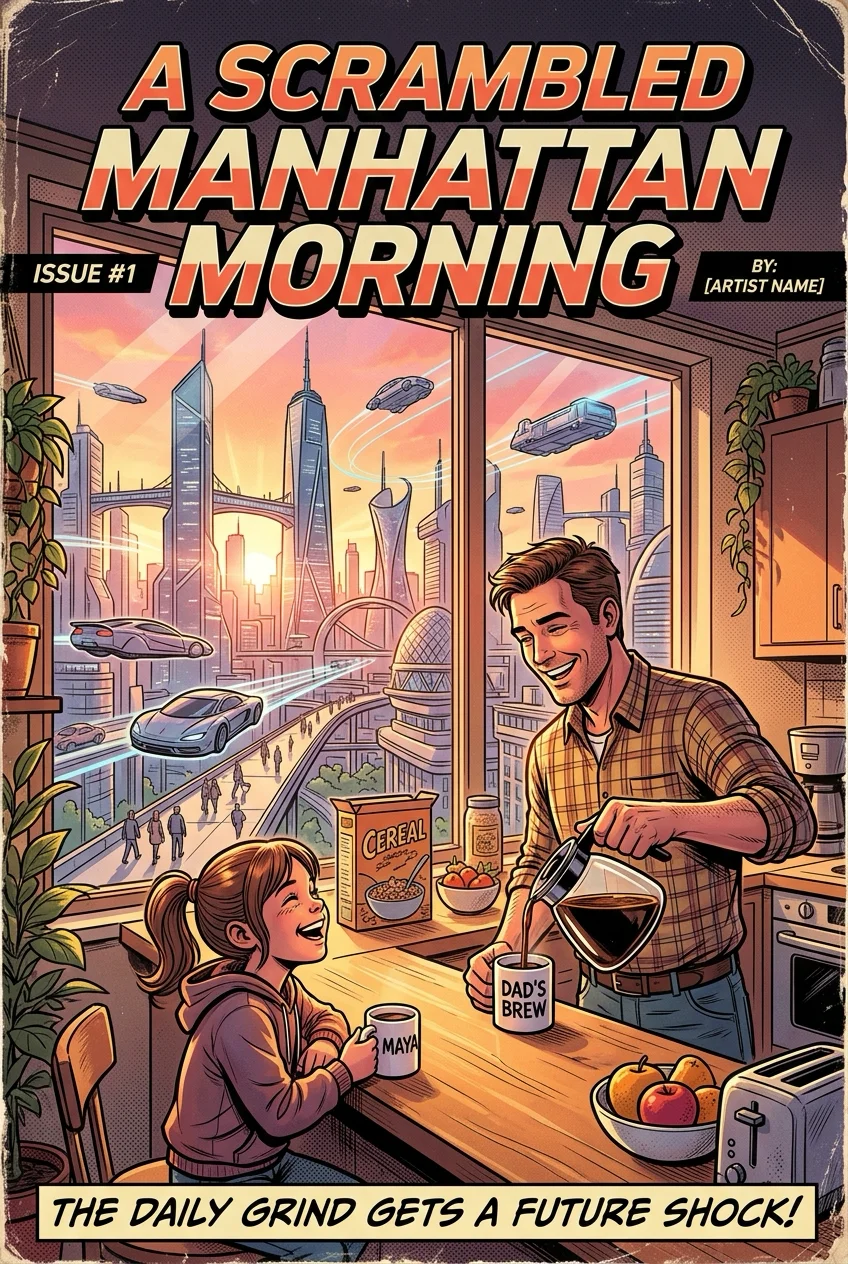
The alarm didn’t sound; it just shifted the ambient light in Elena’s 300-square-foot Queens micro-apartment from a deep amber to the crisp, synthetic blue of a Manhattan sunrise. It was 6:15 AM on a crisp autumn Tuesday in 2056.

Elena sat up, her joints protesting slightly. At thirty-four, she was part of the generation that grew up right on the hinge of the global shift.

She walked over to her small kitchen console and pressed the dispenser. It hummed, synthesizing a hot cup of coffee blend—mostly roasted chicory and lab-grown coffee bean solids. Real South American coffee beans were an extreme luxury now, heavily tariffed by the Pan-Asian Trade Bloc, which controlled the primary shipping lanes across the Pacific.

The Last Echo of Sector 7

The Last Echo of Sector 7

The distress beacon had been repeating for three hundred years.

In the lawless fringe of Sector 7, three-hundred-year-old signals usually meant one of two things: a hull full of degraded, useless scrap, or a lethal trap left behind by long-dead raiders. But Jax was down to his last half-liter of oxygen-scrubber fluid, and his ship, The Rustbucket, was practically running on hope and duct tape. He changed course.

The Watchmaker's Secret

The bell above the door chimed, but Elias didn’t look up. His world was entirely contained within the three-inch circle of a tarnished silver pocket watch.

Elias was a horologist—a fixer of time. His shop in the narrow alleys of the city smelled of brass polish, aged wood, and the faint, metallic scent of clock oil. The watch currently on his workbench had been brought in earlier that morning by a young woman. “It was my grandfather’s,” she had said, tracing the engraved initials on the casing. “It hasn’t ticked since he came back from the war. Fifty years.”