Tuesday's Eggs
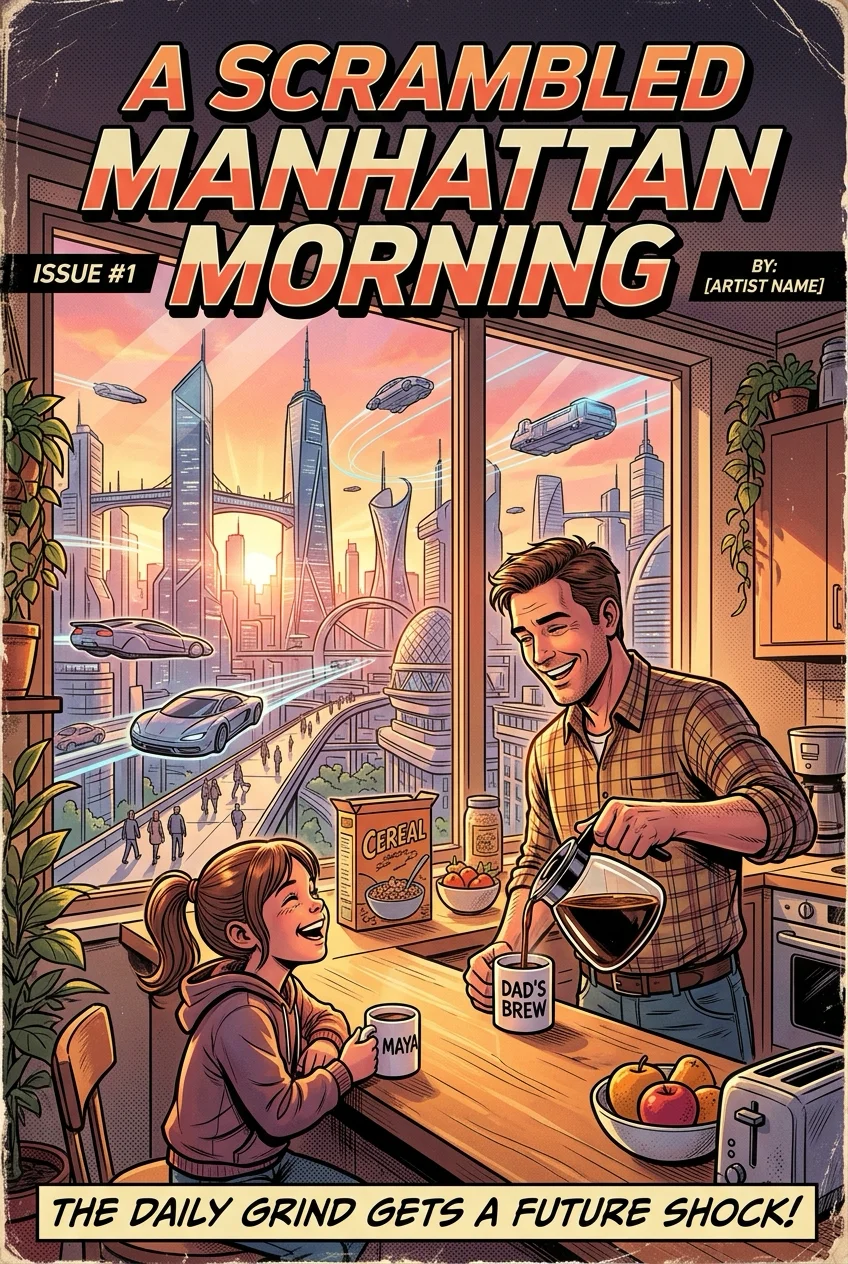
The ambient glow of the kitchen clock read 6:45 AM, casting a soft amber light across the quartz island of Leo’s two-bedroom apartment on 88th and York. Outside, the East River was a quiet, gray slate, dusted with the first pale streaks of a Manhattan autumn sunrise.
Leo slid a slice of sourdough into the toaster and turned on the espresso machine. The steady, rhythmic hiss of steam filled the quiet kitchen.
From the hallway came the soft rustle of school papers and quick footsteps. His daughter, Maya, stepped into the kitchen, adjusting her backpack.
“Oat milk or almond today, Dad?” she asked, leaning over the counter.
“Oat. Your toast is almost up,” Leo said, setting a warm mug down in front of her.
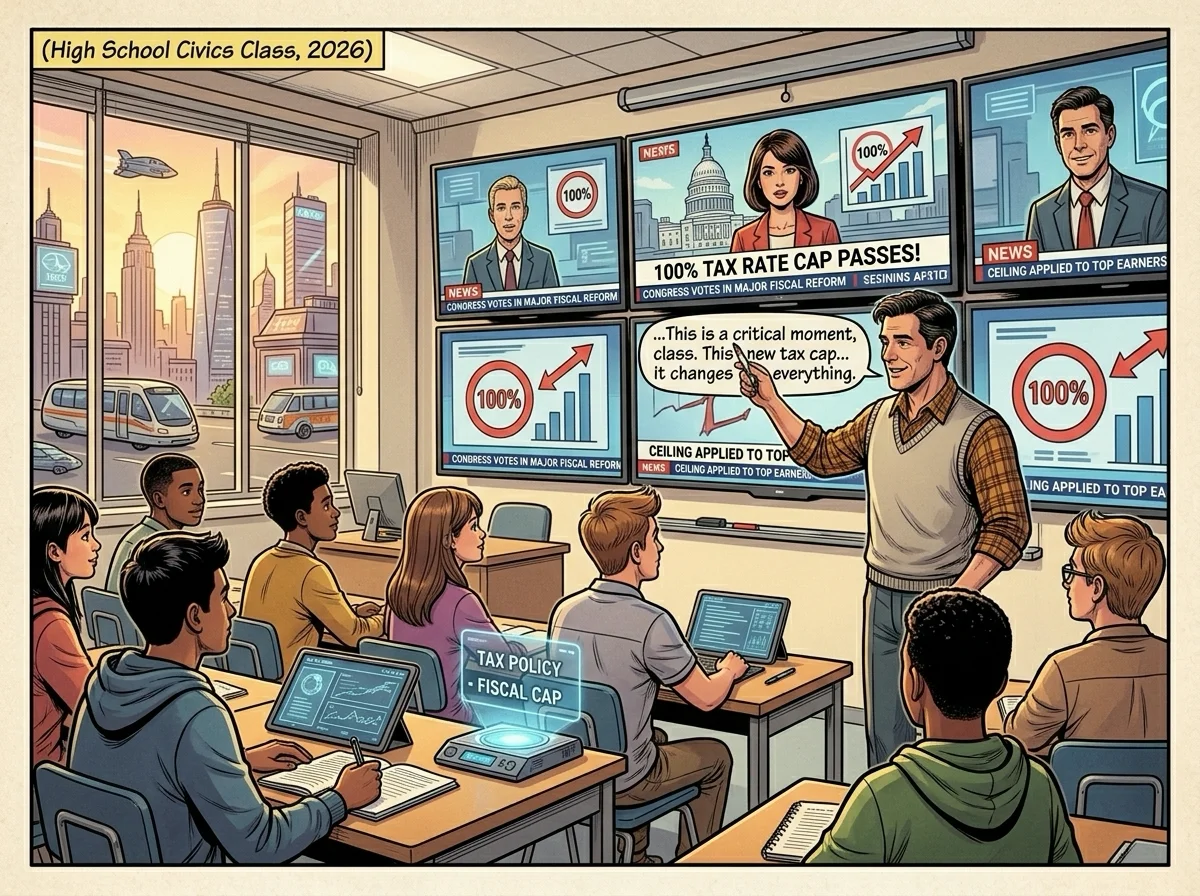
As he watched her spread almond butter over her toast, Leo caught his reflection in the dark glass of the microwave. Forty-one years old. It felt like yesterday he was sitting in his high school civics class in the autumn of 2026, listening to his teacher debate the sweeping passage of the 100% top marginal tax rate—the famous $200 Million Cap.
Back then, the news cycles were relentless. Analysts had predicted financial armageddon, predicting the total collapse of Wall Street and the sudden disappearance of every corporate headquarters between Midtown and Wall Street.
Yet, looking out his window twenty years later, Manhattan was still humming. But the rhythm of the city had quietly, fundamentally shifted.
Leo opened the fridge and pulled out a carton of eggs. He remembered how his father, an accountant in the early 2000s, used to talk about the era of the “cash mega-bonus”—executives pulling down $50 million cash checks in a single December, buying penthouses in cash, and throwing liquid wealth around like confetti.
That culture had vanished. Nobody took liquid payouts like that anymore.
Instead, the ultra-wealthy had adapted. The tech founders and private equity chiefs still controlled vast fortunes, but their wealth lived entirely in long-term asset trusts, non-taxable collateralized credit lines, and corporate-owned foundations. You didn’t see multi-hundred-million-dollar cash salaries on tax returns anymore; you saw corporate-provided housing arrangements, long-term equity compounding, and structured lifetime annuities capped at $199 million a year.
In a strange way, the cap had rewritten the everyday fabric of the city for people like Leo, a middle-management logistics coordinator for a regional food distribution network.
When corporate titans could no longer take home infinite liquid compensation, public companies and private firms had shifted their excess profits into corporate perks, massive R&D budgets, and broader employee profit-sharing pools to retain talent.
Leo’s own company now offered fully subsidized commuter passes, comprehensive family healthcare that covered every cent of Maya’s orthodontics, and an automated profit-sharing contribution that deposited directly into his pension every quarter. Manhattan remained undeniably expensive, but the extreme upward squeeze on everyday middle-class living had stabilized into something far more predictable.
“Dad? You’re staring at the eggs,” Maya said with a small smile, tapping the edge of her plate.
Leo blinked, coming back to the present. “Right. Scrambled?”
“Please.”
He cracked three eggs into the pan, the butter sizzling gently against the stainless steel.
“Did Mr. Vance give you back your history essay on the 2020s economic reforms?” Leo asked, swirling the eggs with a spatula.
“Yeah. Got an A-minus,” Maya said, taking a sip of her tea. “He said my section on the ‘Buy-Borrow-Die’ shift was sharp, but I should’ve spent more time on how corporate reinvestment grew in the 2030s.”
Leo smiled, sliding the eggs onto a plate and handing it to her. “Sounds like Mr. Vance knows his stuff.”
He poured himself a fresh cup of coffee and leaned against the counter, taking a warm sip. The city outside was waking up—the distant hum of electric buses on First Avenue, the rhythmic clink of a delivery truck, the chatter of neighbors heading down the elevator.
The world hadn’t turned into a utopia, nor had it collapsed. It had simply evolved. The era of the hyper-liquid billionaire had given way to a quieter, highly structured economy of stewardship and long-term retention.
Maya grabbed her jacket, slinging her backpack over one shoulder. “I’m meeting Sarah at the subway. See you at six?”
“Six o’clock. Have a good day, kiddo,” Leo said, giving her a quick side-hug.
As the front door clicked shut, Leo took his mug over to the window. Taking one last quiet breath before heading out to catch his train, he watched the morning sun light up the Manhattan skyline—solid, enduring, and moving steadily into another day.
Like this bullshit? Consider buying me a coffee!