The Sentence
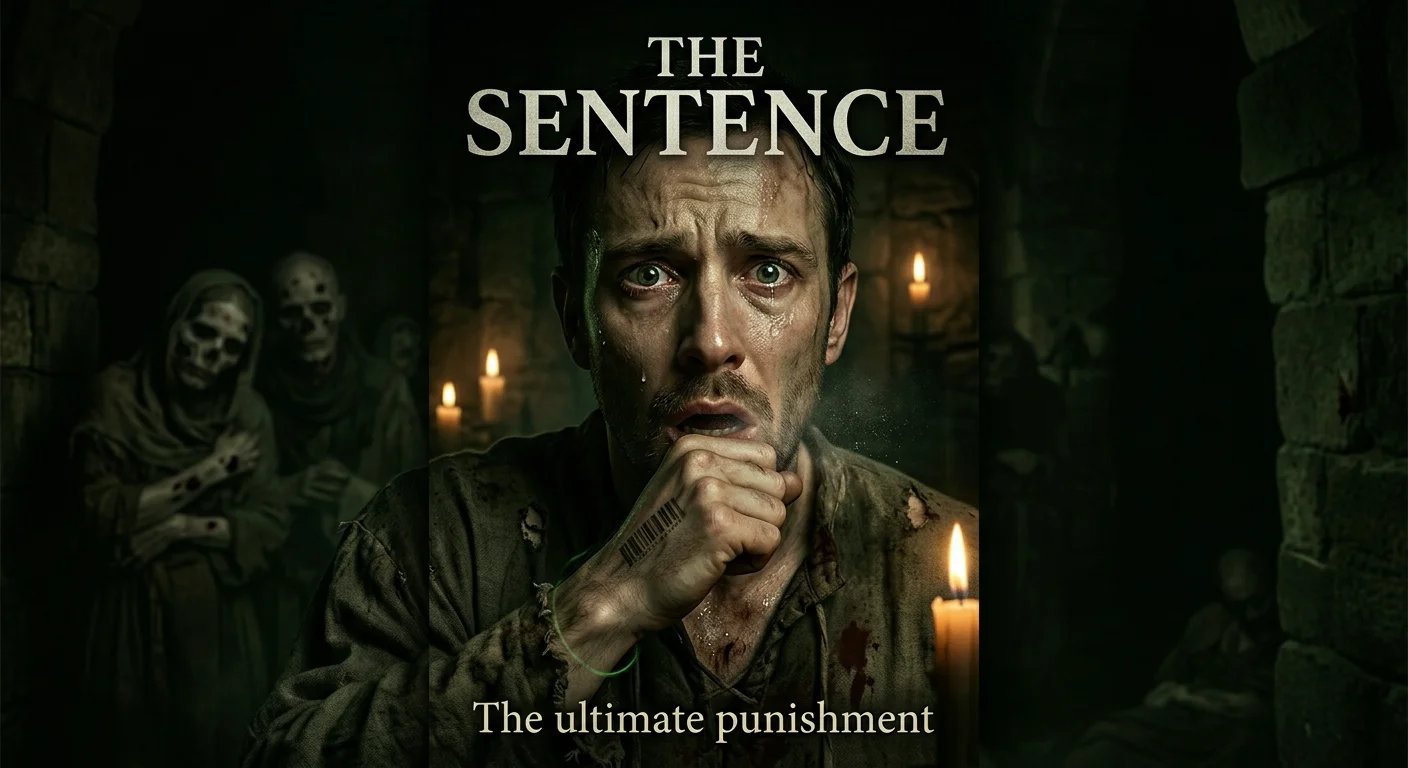
The Sentence
The darkness was absolute.
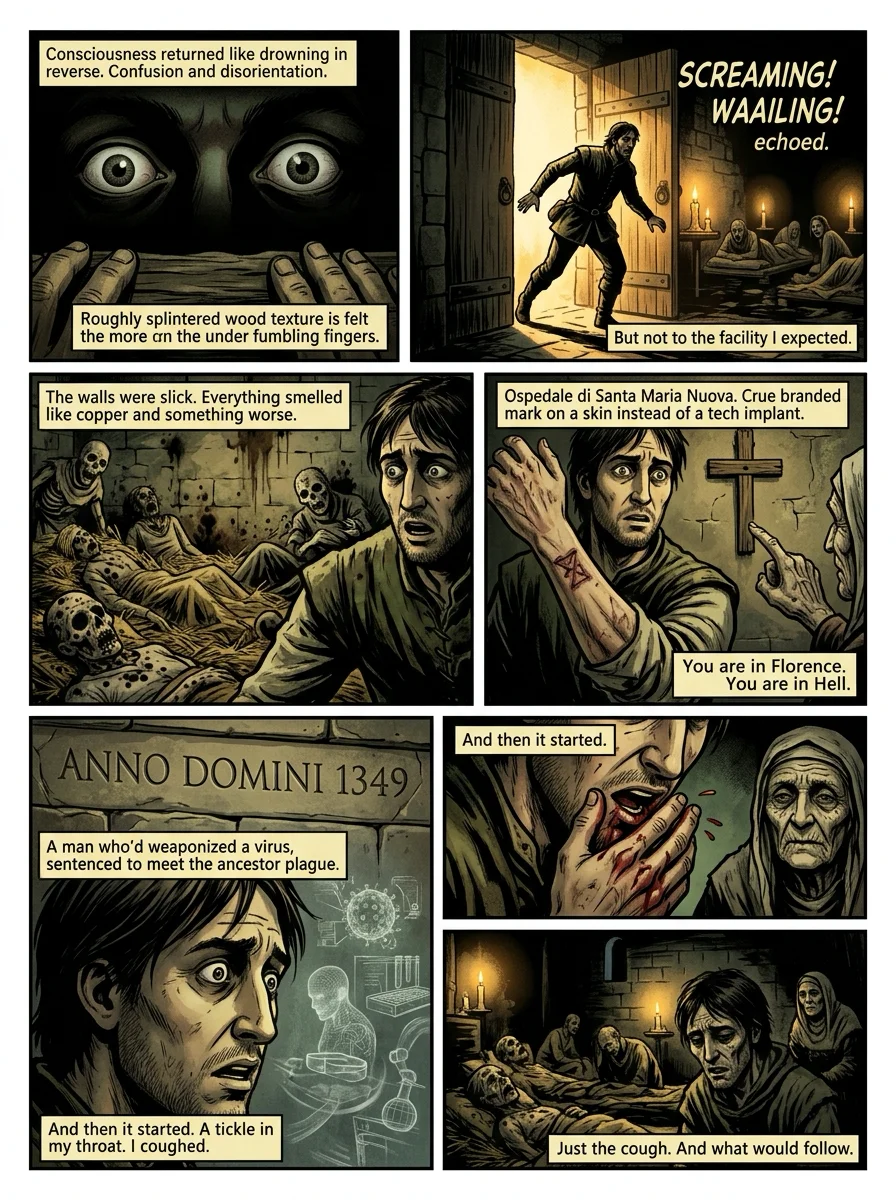
When consciousness returned, it came like drowning in reverse—gasping, clawing back to awareness through layers of chemical fog. My eyes opened to blackness. Hands fumbled forward, meeting rough wood inches from my face. A shelf. I was in a closet.
The temporal transit drug. They’d warned me about this—that the jump would leave me disoriented, that I’d wake confused. But they’d also promised I’d know where I was going. They’d shown me the facility: white walls, containment chambers, somewhere they could study what they’d need to study.
I pushed against the door. It scraped open, and sound rushed in like a wave.
Screaming.
Not the controlled observation chambers I’d expected. Not clinical. This was raw—animal, primal. The kind of sound humans make when they’ve stopped hoping. I stumbled into light so dim it barely qualified as light, my eyes adjusting to find myself in a stone room lit by candles. The walls were slick. Everything smelled like copper and something worse, something that made my body recoil before my mind caught up.
“Another one,” someone muttered in Italian. Old Italian, the kind I’d studied but never heard spoken. My temporal translator caught it, converted it to sense. “The fever will take him by tomorrow.”
Fever?
I looked down. My wrist bore a mark—not the identification chip I expected, but a deliberate scar. A mark. They’d given me a mark like these people carried. My clothes were gone, replaced with rough linen, filthy with things I refused to identify.
Around me, the closet was no closet at all. It was a room—a chamber packed with bodies on straw. Some were moving. Some were not. The ones moving were trying to move away from me, their faces skeletal, their skin the color of old bruises. Black patches covered them, weeping and gangrenous. The smell intensified.
No.
“Where—” My voice cracked from disuse. “Where is this? What facility—”
“Ospedale di Santa Maria Nuova,” an old woman croaked, pointing a trembling finger at a crude cross painted on the wall. “You are in Florence. You are in Hell.”
The words meant nothing. Meaningless. But my translator was still working, and it showed me the date embedded in the stone’s dust: Anno Domini 1349.
The Black Death.
The punishment database flashed in my mind—I’d been arrested in 2487, but they’d told me nothing about where the sentence would be served. They’d just said justice. They’d said poetic. A man who’d cultivated and weaponized a virus sentenced to meet the ancestor plague he’d dreamed of improving. They’d called it rehabilitation.
I staggered backward, hit something. A body. Not moving. Already cold.
“How long?” I gasped. “How long does it take?”
The old woman watched me with eyes that had seen too much. “For some? Hours. For others?” She shrugged. “The plague does not rush. It eats slowly.”
The temporal device had been one-way. They’d made that clear. No retrieval. No appeal. A sentence in the truest sense—to die where my work had begun, to understand the tool I’d wielded as something real, something that didn’t care about justifications or ideology. Something that simply was, and that simply killed.
The screaming continued around me. Bodies shifted on straw. The candles guttered. In 1349 Florence, in this room of the dying, I finally understood what fear was.
And then it started—a tickle in my throat. Small. Insignificant.
I coughed.
The old woman’s expression didn’t change. She’d seen this beginning before. She would see it end.
I coughed again, tasting copper, and realized with absolute clarity that I would not leave this room. No future transport. No mercy. Just the plague, patient and inevitable, the real thing he’d dreamed of becoming.
Just the cough.
And what would follow.
Like this bullshit? Consider buying me a coffee!