Cold Peace
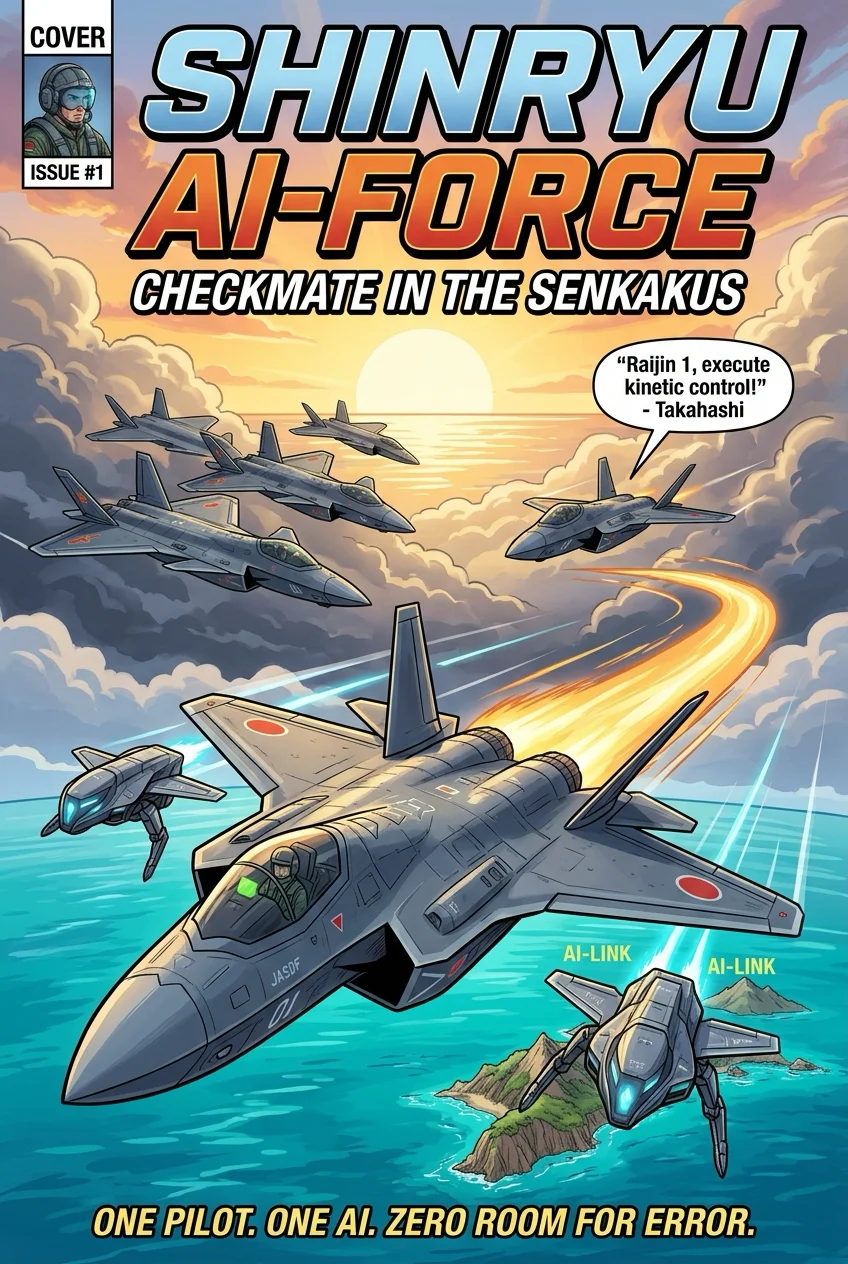
High above the turquoise expanse of the East China Sea, the morning sun glinted off the sleek, radar-absorbent hull of the Mitsubishi F-3X Shinryu. Major Kenji Takahashi monitored the tactical feed integrated directly into his visor. Flanking his fighter were two autonomous Raijin wingman drones, their engines humming in perfect, AI-synchronized harmony—a testament to three decades of unhindered Japanese technological and financial dominance.
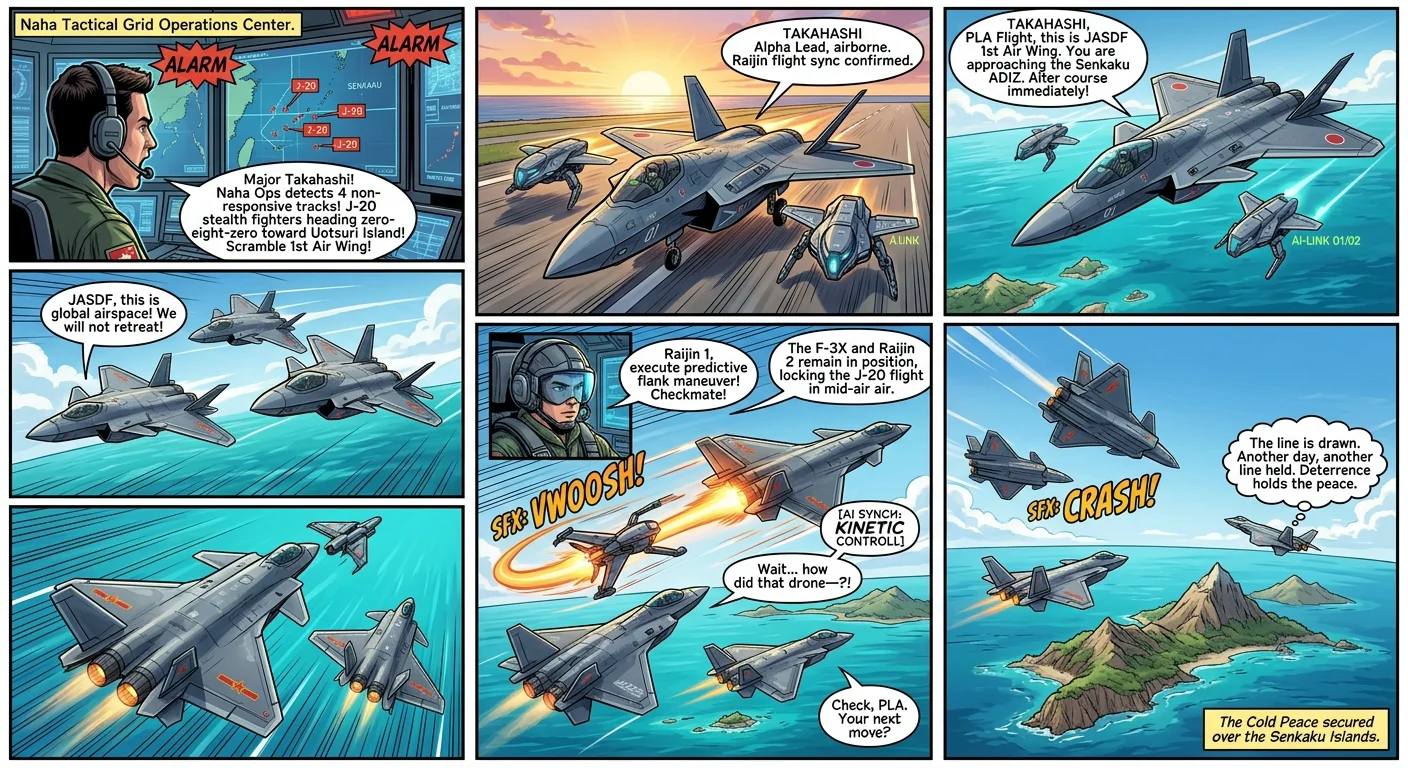
“Alpha Lead, this is Naha Tactical Grid,” a controller’s voice cut through the quantum-encrypted comms. “Sensors detect four non-responsive tracks crossing the median line, heading vector zero-eight-zero toward Uotsuri Island. Signatures match PLA Air Force J-20 stealth fighters.”
Kenji nudged his throttles forward, banking his formation toward the Senkaku chain. In an earlier era, Tokyo might have scrambled jets in a defensive panic, reliant on distant American satellite telemetry. But in this timeline, Japan’s defense network operated at the apex of global military software.
Within seconds, the Shinryu’s indigenous electronic-warfare suite sliced through the incoming Chinese jammers, painting the four intruder jets on Kenji’s display with absolute clarity. The Chinese flight was flying an aggressive edge-of-envelope line, testing Japan’s regional response grid.
“PLA flight, this is JASDF 1st Air Wing,” Kenji broadcast in Mandarin, his tone measured and firm. “You are approaching the Air Defense Identification Zone over the Senkaku Islands. Alter course immediately.”
The lead J-20 responded by pulling a sharp, high-G climbing turn, attempting to maneuver into an advantageous position above Kenji’s flight path. The test was clear: push the boundary, gauge the resolve.
Before the Chinese lead could complete the arc, Kenji’s neural interface engaged. With a subtle command through his helmet array, he directed his lead Raijin drone. Fueled by Japan’s cutting-edge predictive flight algorithms, the uncrewed craft surged forward, instantly closing the gap and placing itself squarely on the J-20’s tail cone. The tactical display flared bright amber as the Japanese grid established complete kinetic control of the airspace.
For eight tense seconds, five advanced warplanes drifted at Mach 1.4 over the razor-sharp reefs of Uotsuri Island.
Then, the lead PLA pilot leveled his wings, acknowledging the checkmate. The four Chinese fighters broke off their trajectory, banking westward toward the mainland. Kenji watched the radar contacts recede, keeping his formation steady along the perimeter—another day in the high-stakes Cold Peace, secured by ironclad deterrence.
Editor’s note: Alternative timeline where Japan’s economy didn’t burst.
Like this bullshit? Consider buying me a coffee!