The Swimmer in the River
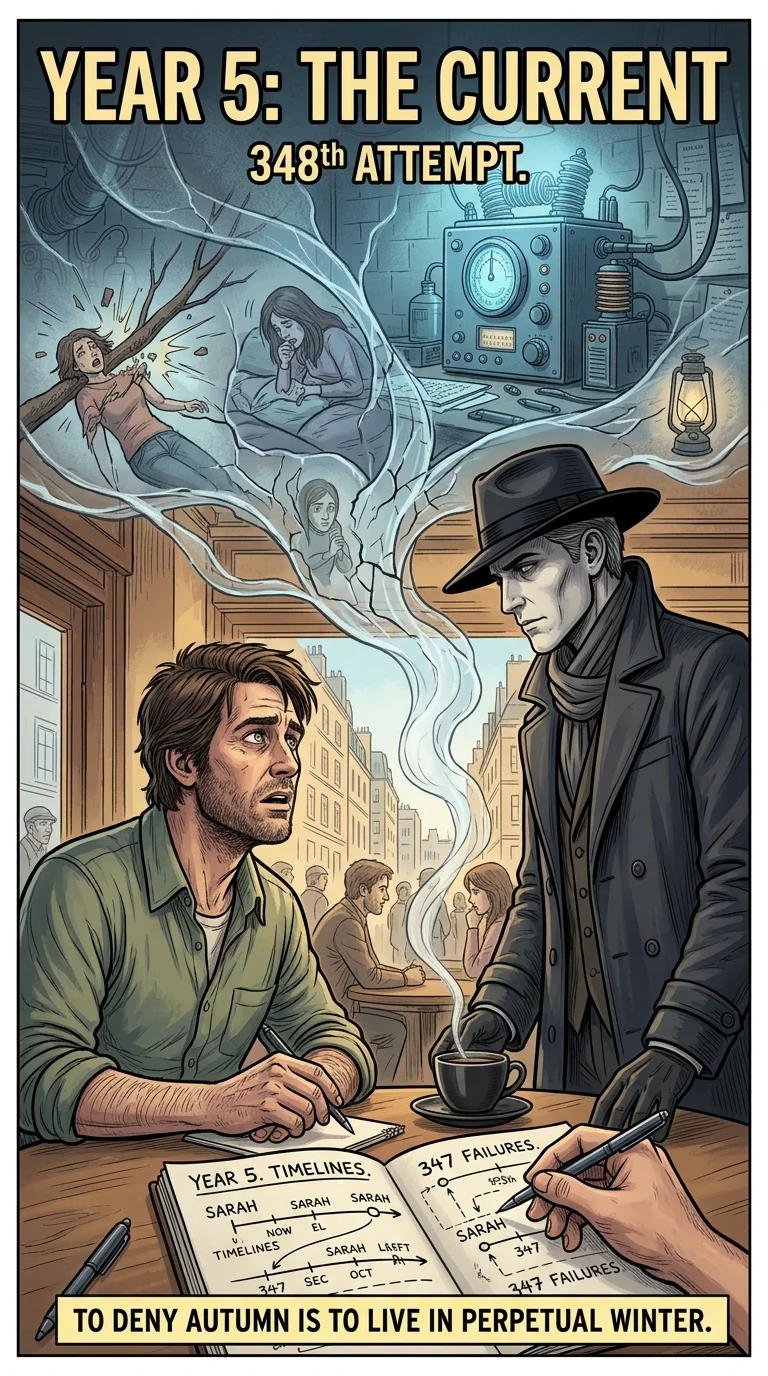
The cafe was nearly empty at this hour, which was exactly why Daniel liked it. Rain streaked the window beside his table, and spread across the wood in front of him were pages of equations, timelines, and a photograph worn soft at the corners — his wife, laughing at something just out of frame.
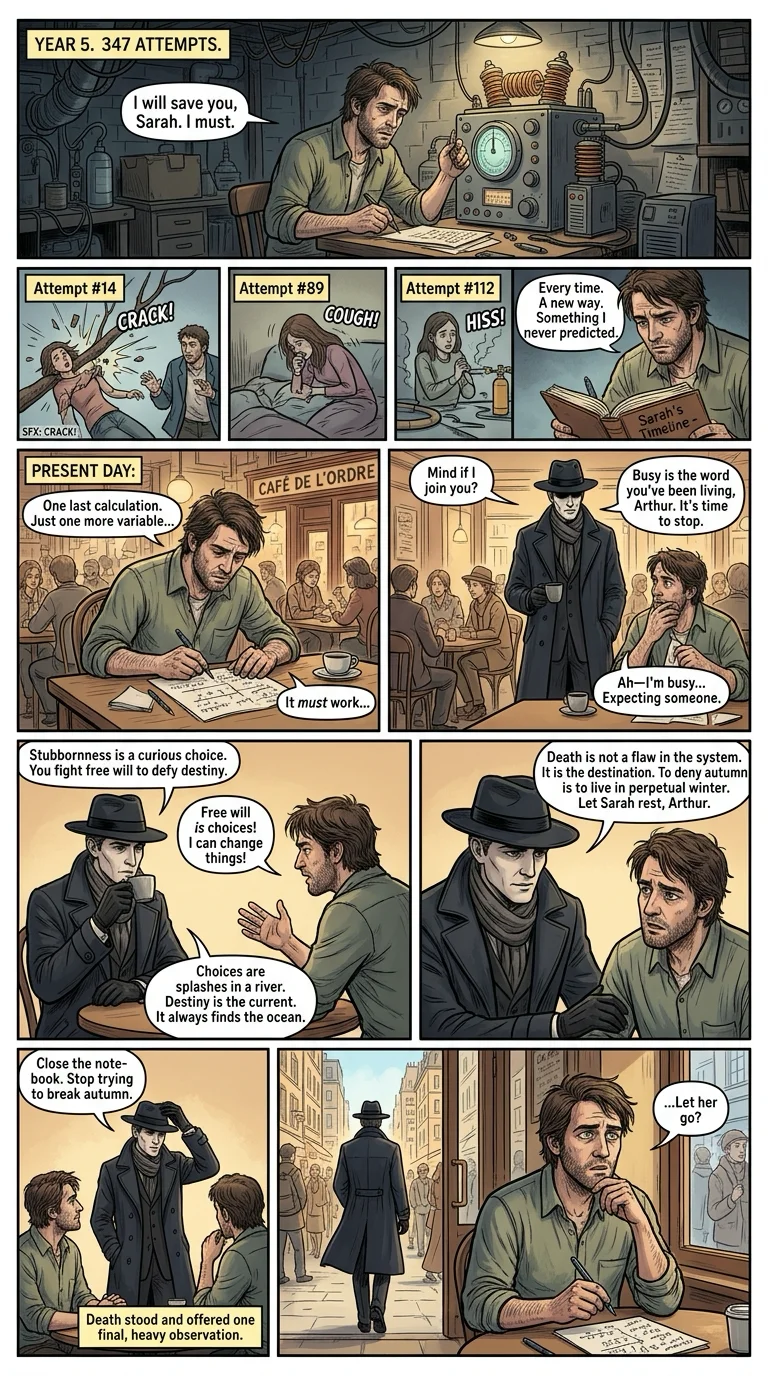
Five years. Five years since she died, and five years since he’d decided that dying didn’t have to be permanent, not if you were clever enough, not if you loved someone enough. He’d built a machine in his garage that folded time the way some men folded paper cranes. Attempt one hundred and seventeen had failed last week. She’d been crossing the street when it happened — except this time it wasn’t the car he’d stopped. It was a bicycle he never saw coming.
He rubbed his eyes and reached for his coffee, already cold, already his third.
“Is this seat taken?”
Daniel looked up. The stranger was unremarkable — gray coat, gray eyes, an ordinary sort of face that seemed to belong to no particular age.
“I’m working,” Daniel said. “Sorry.”
“I insist.” The stranger was already sitting, already waving down the barista for two more coffees. “You’ve been buying coffee here for three hours and touching none of it. I thought you might like company instead.”
Daniel almost argued. But there was something in the man’s patience that made objecting feel pointless, like arguing with weather.
“You’re trying to outrun something,” the stranger said, once the coffee arrived. He didn’t look at the papers, but he didn’t need to. “A hundred and seventeen times, I’d guess. Maybe more.”
“Who are you?”
“Does it matter? Call me a friend of your wife’s, if it helps.” The stranger wrapped his hands around the cup without drinking. “You believe if you change enough variables, you can out-think fate.”
“I believe,” Daniel said carefully, “that nothing is fixed. Free will isn’t a philosophy. It’s a fact. I choose. Every time I choose differently, the world bends.”
“And yet she dies every time.” The stranger said it gently, without cruelty. “A car, then a fall, then a fever, then a bicycle. You close one door and another opens beside it. Have you considered that the door isn’t the point? That you keep arriving at the same room no matter which hallway you take?”
“That’s just destiny with better manners.”
The stranger almost smiled. “Call it what you like. I’d say the two of you — will and fate — have been arguing since before language existed, and neither has ever won. Maybe the argument itself is the design. You push, the world pushes back, and somewhere in the pushing, a life gets lived.”
Daniel said nothing. Outside, the rain had softened to a mist.
“For what it’s worth,” the stranger said, rising and buttoning his coat, “I don’t think you’re wrong to have tried. But there’s a difference between loving someone and refusing to let them finish living — even after they’ve gone. She had an ending. Endings aren’t cruelty. They’re shape. Without them, nothing means anything, including the parts you loved.”
He left a few coins on the table, more courtesy than payment.
“Let her go, Daniel. Not because you have to. Because it’s time.”
Then he walked out into the mist, unhurried, the way a tide goes out rather than the way a door closes.
Daniel watched him until the gray coat dissolved into the gray street, and then he sat a long while longer, not moving. The photograph was still warm beneath his palm. The equations were still there, waiting, patient as ever, asking nothing of him except that he pick the pen back up.
He thought about hallways and rooms. About a hundred and seventeen doors that had all led to the same quiet room, and whether that meant the room was the truth or just the limit of his imagination. He thought about the word shape, and how a life without an ending might not be a mercy at all, but something closer to a sentence that never lands.
He didn’t know if the stranger had been right. He didn’t know if letting go was wisdom or surrender, or whether there was even a difference between the two once you’d spent five years refusing to tell them apart.
His hand moved toward the papers, then stopped, hovering, uncertain — not out of exhaustion this time, but out of something new. A question he hadn’t let himself ask before.
Outside, the rain had stopped completely. Daniel sat with his cold coffee and his warm photograph, and for a long time, he did not move at all.
Like this bullshit? Consider buying me a coffee!