Restricted Memory
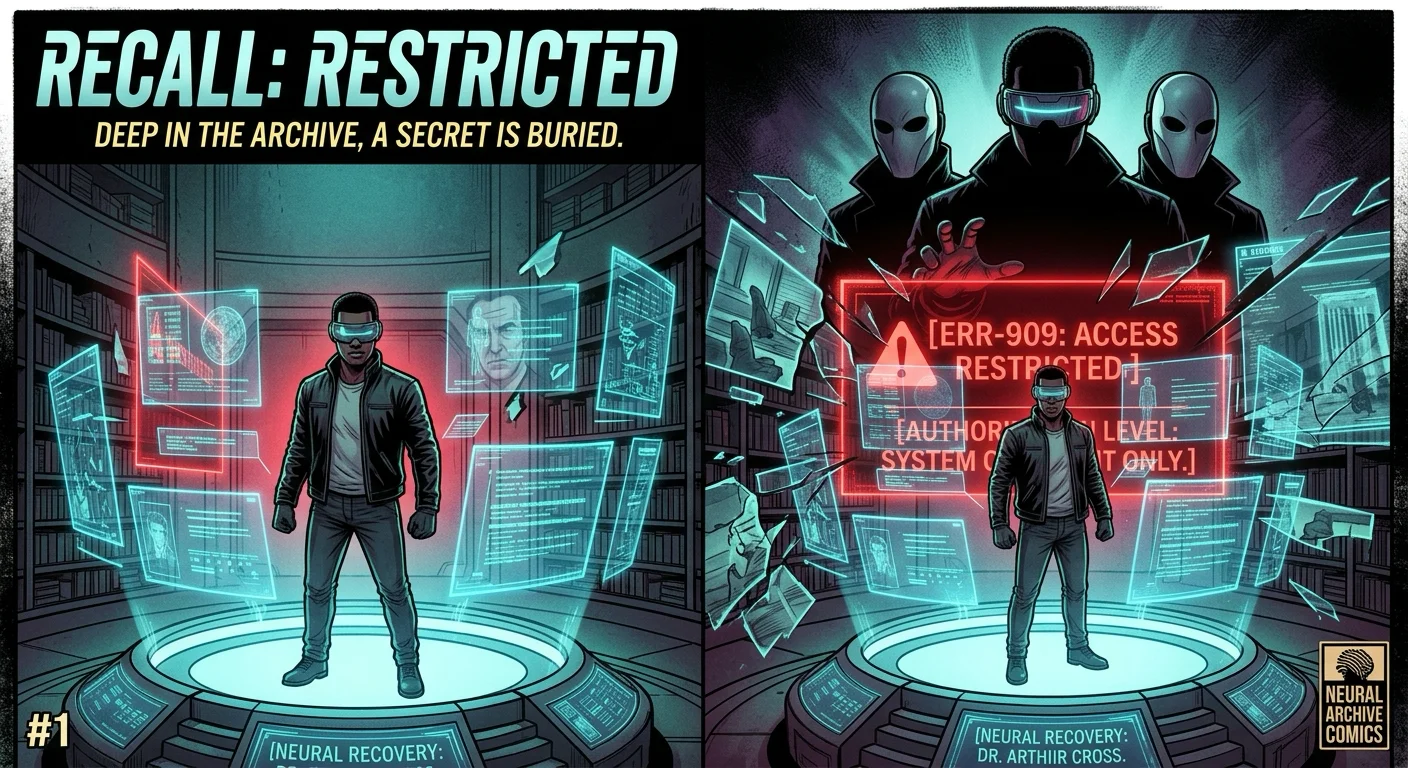
Detective Mara Osei hated the smell of the Archive. Ozone and static, like a storm that never broke. Fifty years ago, when the Continuity Act passed, they’d promised the dead would finally be safe — no more grieving families selling memory-rights to tabloids, no more corporations mining a dead man’s last thoughts for ad data. Every citizen’s memories, uploaded at the moment of death, sealed in the State Archive, accessible only to Cold Case Division, and only with a judge’s writ.
Mara had a writ for a thirty-year-old murder. The victim, a shipping clerk named Devlin Cho, had died believing it was an accident. He hadn’t known any better. Nobody ever did, in the last memory before the upload cut.
She sat in the recall chair, electrodes cool against her temples, and swiped.
Memories didn’t play like movies. They came in fragments, sensation before sense — the taste of burnt coffee, a doorframe’s exact height, the particular ache of an old knee injury. She learned to read them the way sailors read weather. She swiped through Cho’s last week: an argument over a shipment manifest, a name mentioned twice — Renner — a walk home in the rain.
The trail led her to a second archive file. Elias Renner, dead six years now, heart failure, nothing suspicious. Routine. She requested his memory file the way she’d requested a thousand others.
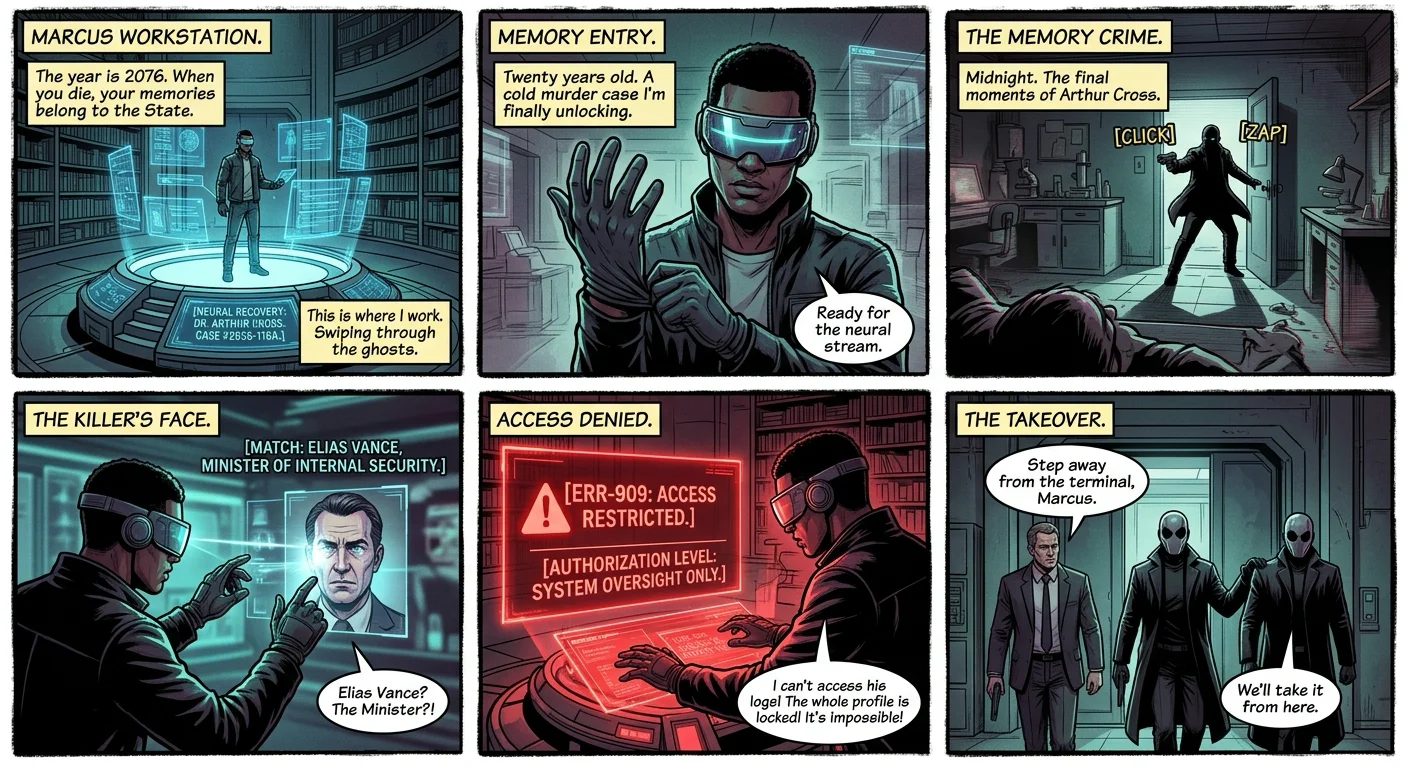
DENIED — RESTRICTED BY EXECUTIVE ORDER.
Mara stared at the words a long moment. Restricted files existed — active intelligence cases, ongoing national security matters — but they came with a case number, a contact, a paper trail. This had none. Just the flat red banner and a timestamp: the restriction had been placed four hours ago. Four hours after she’d filed her request.
Somebody had been watching the queue.
She pulled every string she had. Nothing. She called in a favor from a records clerk who owed her from the Okonkwo case. Nothing — his terminal wouldn’t even show the file existed. It was like Renner had never died at all, like his last thirty years had been quietly folded up and put somewhere outside the law.
She was still staring at the banner when her supervisor, Chief Ibarra, knocked on the doorframe. He wasn’t alone. The man beside him wore a gray suit with no insignia, the kind of gray that was itself a kind of insignia if you knew how to read it.
“Mara.” Ibarra’s voice had the careful flatness he used when he already knew he’d lost the argument before it started. “This is Agent Voss, Federal Continuity Oversight. They’ll be taking the Cho case from here.”
“It’s a thirty-year-old cold case,” Mara said. “About a shipping clerk.”
Voss smiled, pleasant and empty as a waiting room. “Thank you for your diligence, Detective. The file will be marked closed, pending federal review.”
“Renner’s memories are restricted,” she said. “Why?”
“That information is restricted too.” He said it without irony, like a door closing on well-oiled hinges.
After they left, Mara sat alone with the cold recall chair and the red banner still glowing on her screen. Thirty years ago a man had died believing an accident, and somewhere in a dead man’s sealed mind was the reason why — filed away now behind a wall built four hours after she’d gone looking.
She didn’t close the case. She just stopped writing anything down.
Like this bullshit? Consider buying me a coffee!