New York 2056
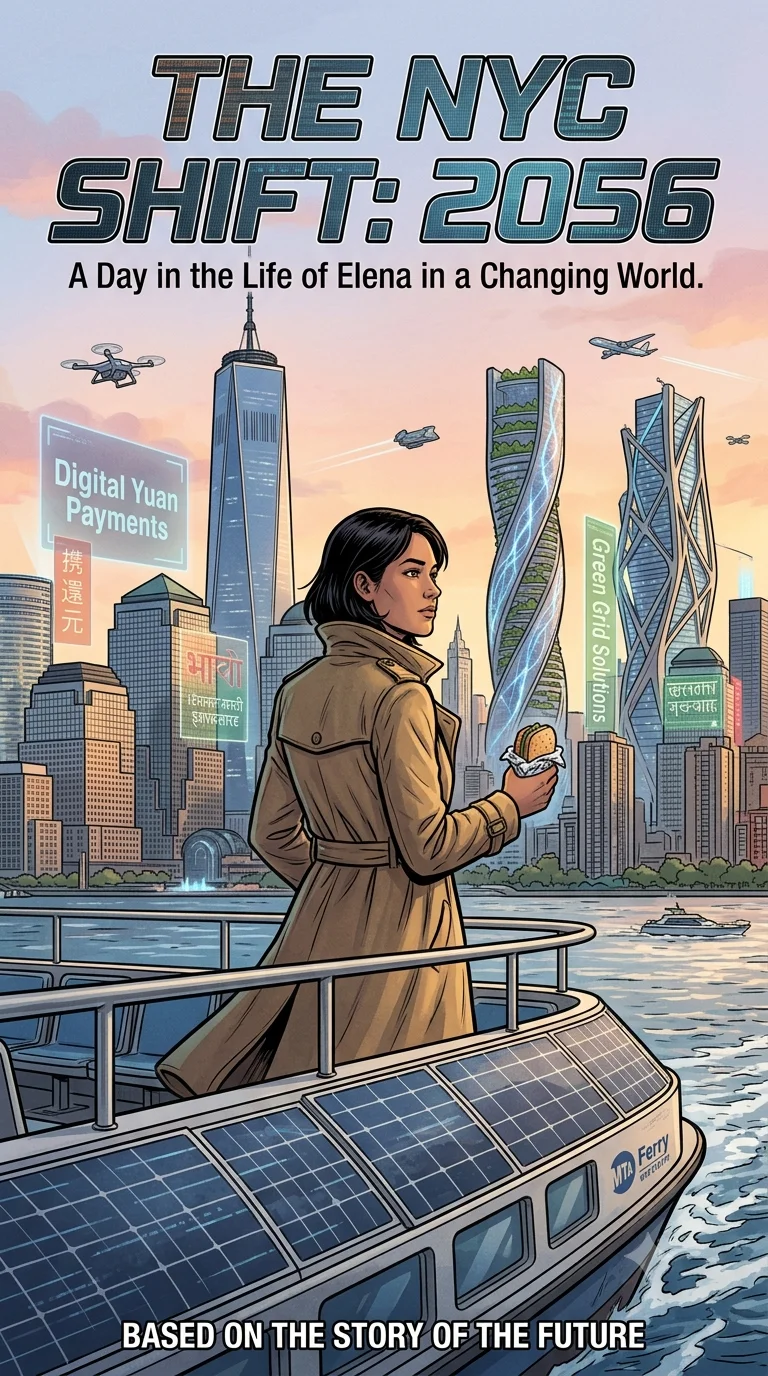
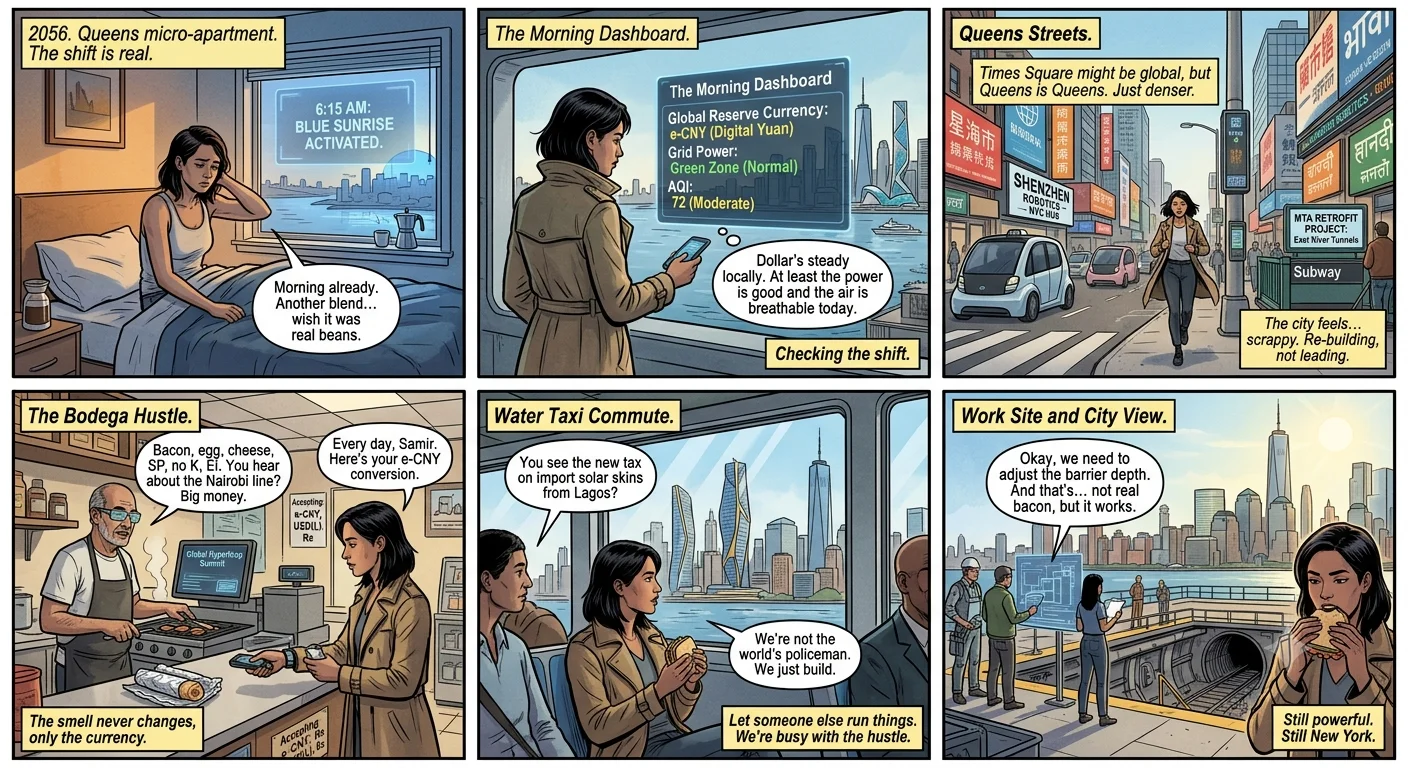
The alarm didn’t sound; it just shifted the ambient light in Elena’s 300-square-foot Queens micro-apartment from a deep amber to the crisp, synthetic blue of a Manhattan sunrise. It was 6:15 AM on a crisp autumn Tuesday in 2056.
Elena sat up, her joints protesting slightly. At thirty-four, she was part of the generation that grew up right on the hinge of the global shift.
She walked over to her small kitchen console and pressed the dispenser. It hummed, synthesizing a hot cup of coffee blend—mostly roasted chicory and lab-grown coffee bean solids. Real South American coffee beans were an extreme luxury now, heavily tariffed by the Pan-Asian Trade Bloc, which controlled the primary shipping lanes across the Pacific.
Elena opened her digital viewport, which projected a translucent feed onto her window overlooking the East River.
The Morning Dashboard
| Metric | Status | Impact on Daily Life |
|---|---|---|
| Global Reserve Currency | Digital Yuan (e-CNY) | Elena’s freelance contracts are pegged to it; the US Dollar is steady but local. |
| Grid Power Allocation | Green Zone (Normal) | Fusion-backed federal grid is stable today; no rolling brownouts scheduled. |
| Air Quality Index | Moderate (AQI 72) | Sea-wall scrubbers are active; no respirator required for the morning commute. |
Elena worked as a localized infrastructure architect. Thirty years ago, a brilliant American tech graduate might have aimed for a global tech monopoly in Silicon Valley. Today, the action was regional. Elena’s job was to retrofit New York’s aging 20th-century subway tunnels to withstand the rising Atlantic, funded largely by federal infrastructure bonds and a massive development loan from the New Delhi Infrastructure Bank.
She pulled on a lightweight, recycled-polymer trench coat—weatherproofed for the unpredictable northeast storms—and stepped out into the Astoria air.
The streets of New York were as loud, chaotic, and vibrant as they had been for two centuries, but the flavor had changed. The yellow cabs were entirely autonomous electric pods now, zip-gliding silently down the avenues. The billboards in Times Square, once dominated by American mega-corporations, were now a mix of global titans: Mumbai-based biotech firms, Lagos-centered entertainment networks, and Shenzhen robotics conglomerates.
Yet, New York hadn’t lost its teeth. The city felt scrappy, resilient, and intensely alive. The United States was no longer the lone superpower dictating global terms, but it remained a fierce, highly specialized force—a hub of cultural reinvention, cutting-edge biomedical research, and high-value manufacturing.
Elena walked into her neighborhood bodega. The smell of frying eggs and grease was exactly as it had been in her grandmother’s time.
“Morning, El,” Samir said, pulling a roll off the grill. He didn’t look up from his terminal, which was flashing a live stream of the Global Hyperloop Construction Summit in Nairobi.
“Hey, Samir. Bacon, egg, and cheese on a roll. Salt, pepper, no ketchup.”
She tapped her wrist to pay. The terminal converted the cost instantly from her digital dollar account into the merchant’s preferred global currency. There was a tiny transaction fee—a daily reminder of the post-dollar world—but nobody thought twice about it anymore. It was just the cost of doing business.
Taking her breakfast wrapped in foil, Elena headed toward the water taxi. As the boat cut through the choppy gray waters of the East River, she looked at the Manhattan skyline. The Freedom Tower stood tall, flanked by newer, slender towers wrapped in photo-reactive solar skins.
The US wasn’t running the world anymore, and honestly, most New Yorkers were fine with that. Let someone else police the global commons. New York was busy doing what it always did: adapting, surviving, and finding a way to hustle through the change.
Elena took a bite of her sandwich. The bacon was plant-derived, the cheese was precision-fermented, but the roll was perfectly chewy, and the city before her was unmistakably, beautifully New York.
Like this bullshit? Consider buying me a coffee!