Field Data
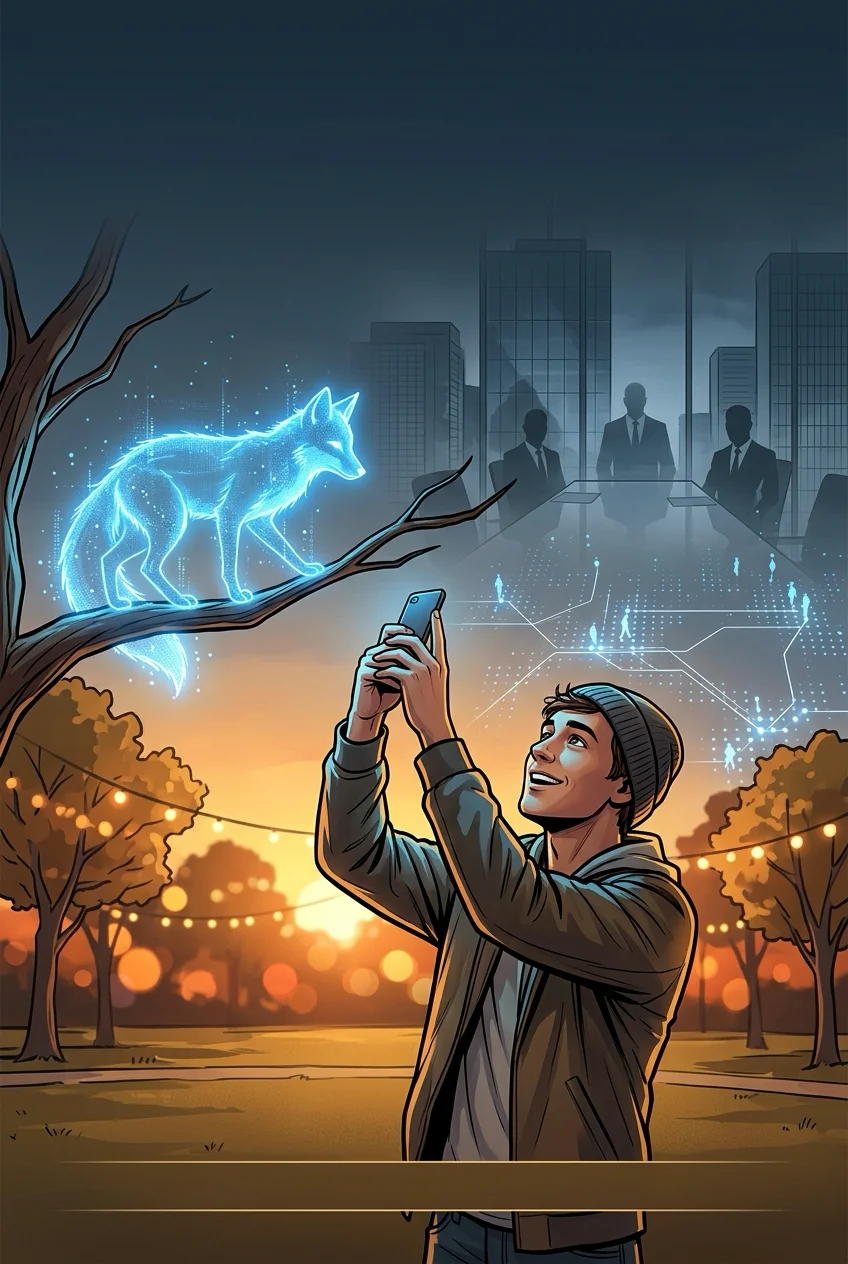
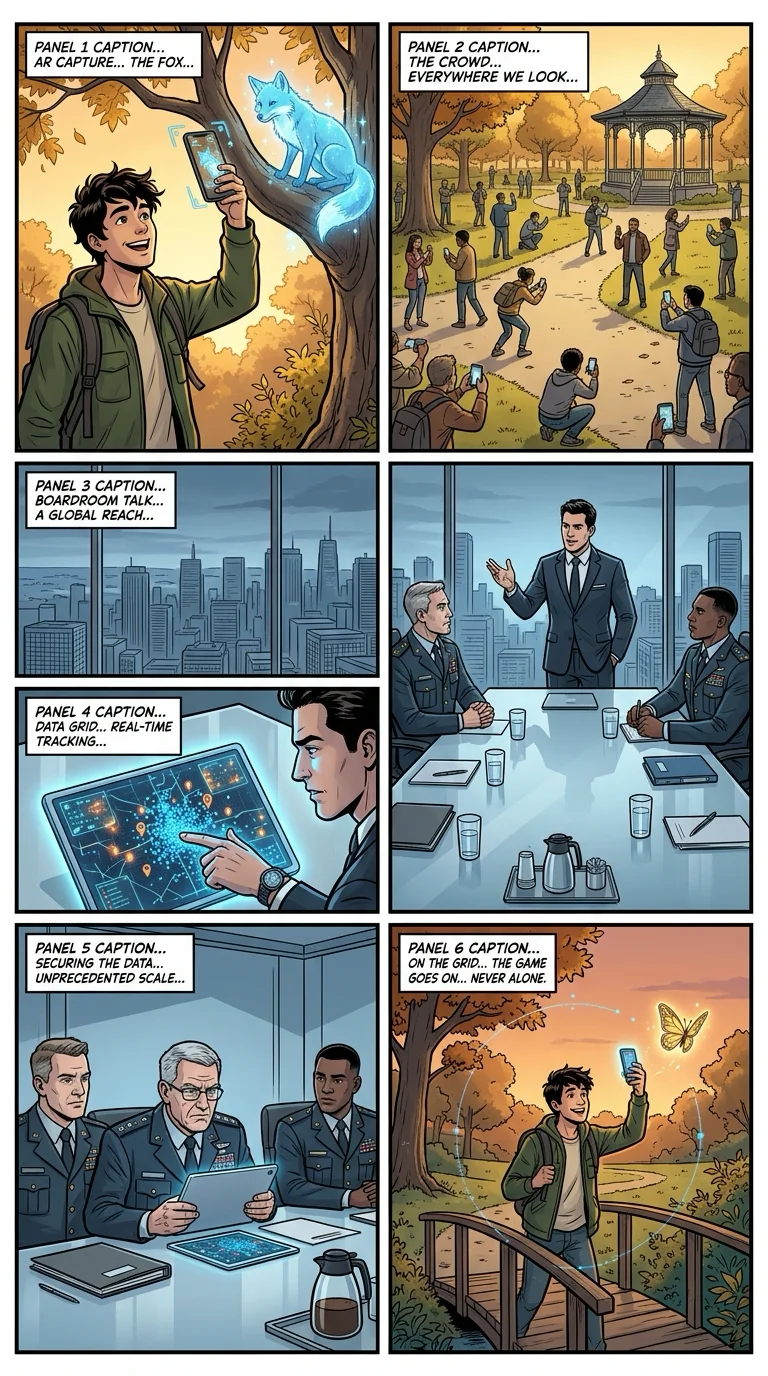
Milo held his phone up to a maple tree and grinned as a shimmering fox made of blue light blinked into existence on his screen, sitting in the crook of a branch that, in the real world, held nothing at all.
Glimmer captured: Ember Fox. Collection: 214/300.
He’d been chasing this one for three days. The app had teased it near the reservoir, then the fountain, then finally here, on the gravel path that cut through Hollis Park. He snapped the photo, watched the little creature dissolve into a burst of pixel-confetti, and felt the small, stupid, wonderful joy of a thing checked off a list.
He wasn’t alone. Up ahead, near the old bandstand, a cluster of people stood in a loose ring, phones raised like they were filming a concert that only they could see. A woman crouched by the hedges, angling for a better shot. Two teenagers sprinted past him, laughing, chasing something invisible toward the pond. On weekends the park filled with them — hundreds of people walking slow loops, pausing, tilting their phones at benches and bridges and storm drains, hunting glimmers that only existed in the app.
Milo checked the leaderboard. Local rank: 12th. He picked up his pace toward the footbridge, where the app had just flagged a “high rarity” ping.
He didn’t think about where that ping came from. Nobody did.
Forty floors up and across the river, the room was cold in the way expensive rooms are cold — glass, steel, a long table with a view of the whole city laid out like a circuit board.
“Let’s talk about scale,” said Vance Calloway, CEO of Halcyon Interactive, sliding a tablet across the table toward the three officers seated opposite him. “Six million active users. Average session length, forty minutes. And this isn’t a survey people fill out once a year and forget about. It’s daily. It’s continuous.”
The officer nearest him — a colonel, gray at the temples, unreadable — didn’t touch the tablet. “Walk me through what’s actually in it.”
“GPS, obviously, to the meter, timestamped every few seconds during play. Photographs — millions a day, geotagged, most of them outdoors, a lot of them near infrastructure, because that’s where our creatures like to spawn.” Calloway allowed himself a small smile at that. “Movement patterns. Which routes people take, which ones they avoid, how fast they move through a given block. Updated daily. Not a snapshot — a living picture.”
“You’re describing pattern-of-life data,” the colonel said.
“I’m describing pattern-of-life data collected by people who volunteered it, in exchange for cartoon animals,” Calloway said. “That’s the part I’d frame carefully in the deck. Nobody signed a consent form that said ‘military contractor.’ They signed one that said ’terms of service.’”
A younger officer, a major, finally spoke. “And the resolution’s good enough for—”
“Better than satellite, in some respects,” Calloway cut in smoothly. “Satellites give you a moment. We give you a habit. You want to know which routes a facility’s personnel actually walk after dark, which entrances get foot traffic, which streets go quiet at 2 a.m. — that’s not something you get from orbit. That’s something you get from six million people playing a game.”
The colonel studied him for a long moment. “And if this becomes public.”
“It won’t, if it’s structured the way I’m proposing. The data doesn’t leave Halcyon’s servers. You get access, not ownership. Aggregated feeds, tactical overlays, whatever format your analysts want. Officially, we’re a mobile entertainment company with a location-data licensing division. Which is true. It’s just not the whole sentence.”
Nobody laughed, but nobody objected either. The major made a note. The colonel finally reached out and turned the tablet toward himself, scrolling through a live heat map — a city, pulsing gently with thousands of small blue dots, clustering near parks, bridges, government buildings, drifting along familiar paths like blood moving through veins.
“We’d want a pilot region,” the colonel said. “Something with existing installations nearby. See how the coverage holds up.”
“I can have three cities on your desk by Friday,” Calloway said. “High player density, good spawn coverage, solid daily refresh rates.”
“Good,” the colonel said, and closed the folder. “Let’s talk numbers.”
Back at Hollis Park, Milo stood on the footbridge, phone raised, waiting for the rare glimmer to render. Below him, joggers passed. A woman walked her dog along the water. Somewhere behind him, in the reflection of his screen, dozens of tiny blue dots moved through the park without knowing they were dots at all.
The fox appeared, gold-edged this time, rarer than the last. Milo laughed out loud and tapped the screen.
Glimmer captured. Location saved. Collection: 215/300.
He never once wondered who was collecting him back.
Editor’s note: Inspired by Pokemon Go data helped train military drones.
Like this bullshit? Consider buying me a coffee!