The Long Game
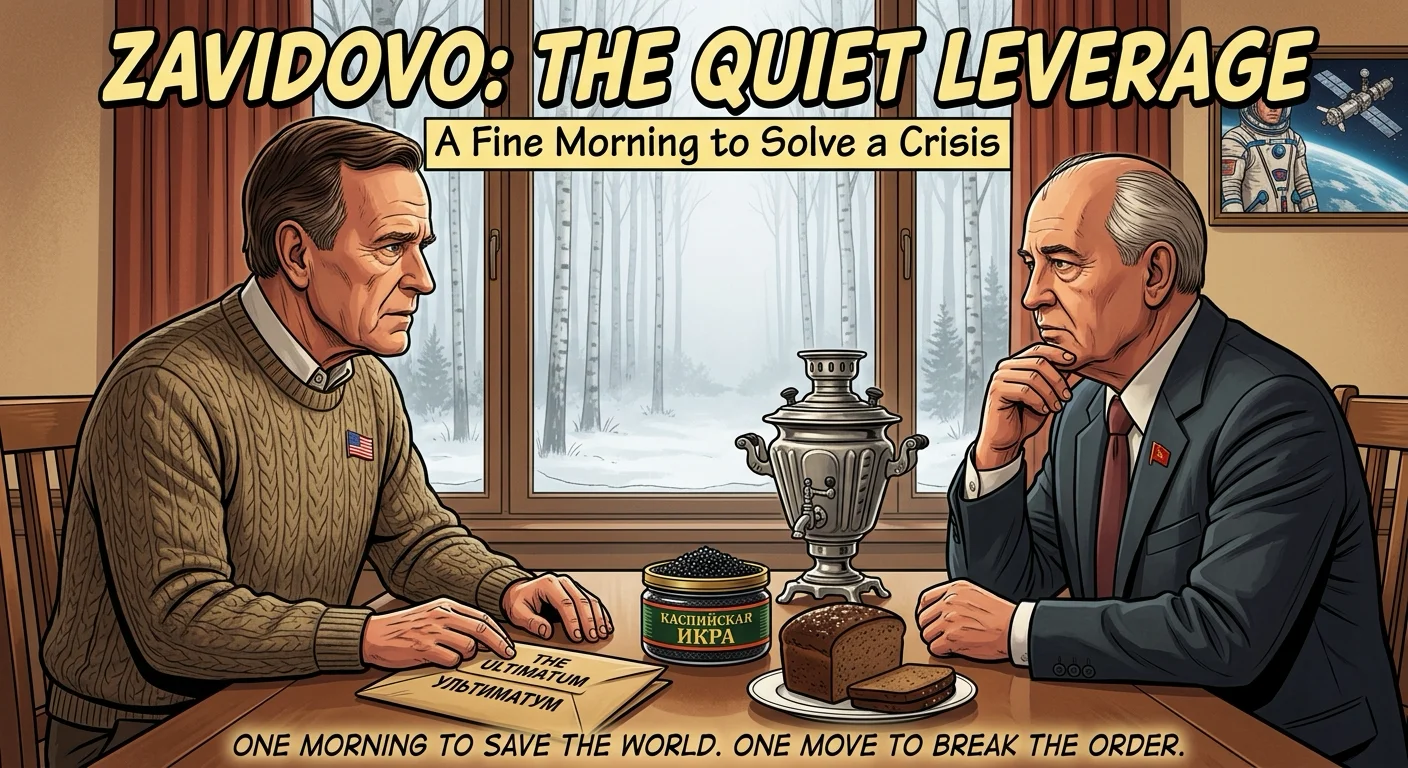
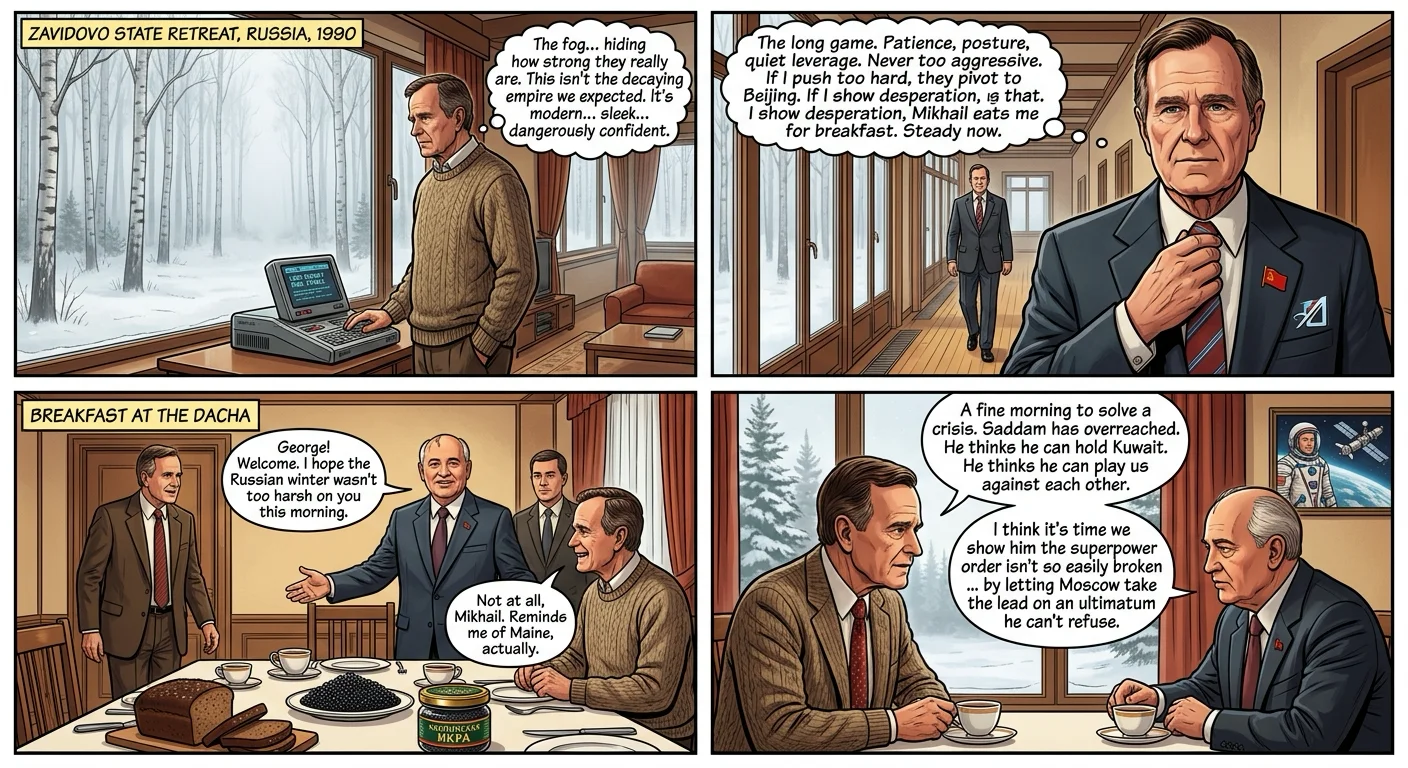
The morning fog over the pines at Zavidovo was thick enough to swallow the birch trees whole. George Bush adjusted the collar of his woolen sweater, staring out the floor-to-ceiling window of the state dacha. Outside, the air was bitter cold, but inside, the modern Soviet retreat burned with quiet, prosperous warmth. This wasn’t the decaying, bureaucratic empire his predecessors had anticipated decades ago. The Soviet Union in the winter of 1990 was modern, sleek, and dangerously confident—a market-socialist leviathan that had successfully retooled its central planning without surrendering an inch of its global reach.
George took a slow, deliberate breath, steadying his pulse. The long game had changed, but the core objective remained absolute: keep the United States one step ahead without backing Moscow into a corner. You didn’t beat a competitor like this by flexing muscles you couldn’t back up; you did it with patience, posture, and quiet leverage. One rash move, one overly aggressive threat, and Moscow would simply pivot harder toward its booming economic axis with Beijing, closing off Eurasia entirely. But project weakness—show even a flicker of desperation—and Mikhail would eat him alive over breakfast.
He checked his watch, squared his shoulders, and turned toward the heavy mahogany doors.
The dining room smelled of dark rye, black tea, and fresh caviar. Mikhail Gorbachev was already seated at the head of the long table, looking relaxed and completely in his element. He rose with a warm, measured smile, extending a broad hand.
“George,” Mikhail said through his interpreter, his voice carrying the calm authority of a leader who held all the regional high cards. “I hope the Russian winter wasn’t too harsh on you this morning.”
“Not at all, Mikhail. Reminds me of Maine,” George lied smoothly, taking his seat.
As the attendants poured steaming tea, the unsaid tension in the room settled like heavy armor between them. On paper, they were here for bilateral trade frameworks, but both men knew the real test was sitting three thousand miles south. Saddam Hussein’s army had seized Kuwait, threatening the stability of the global energy supply.
In another world, Washington might have unilaterally deployed half a million troops to the desert to crush the Iraqi forces. But in this reality, with a powerful Sino-Soviet bloc threatening a UN Security Council veto and Moscow holding Iraq’s economic lifeline, a massive Western military intervention was a non-starter. George couldn’t force a war without risking a catastrophic Cold War rupture. He had to play the diplomat, coaxing Moscow to use its own weight to resolve the crisis.
“It’s a fine morning to solve a crisis,” George said softly, leaning back with a measured smile. “Saddam has overreached, Mikhail. He thinks he can hold Kuwait, and he thinks he can play us against each other. I think it’s time we show him that the superpower order isn’t so easily broken—by letting Moscow take the lead on an ultimatum he can’t refuse.”
Mikhail’s eyes narrowed slightly over his teacup, a silent acknowledgment that the game was officially underway.
Like this bullshit? Consider buying me a coffee!