The First Thought
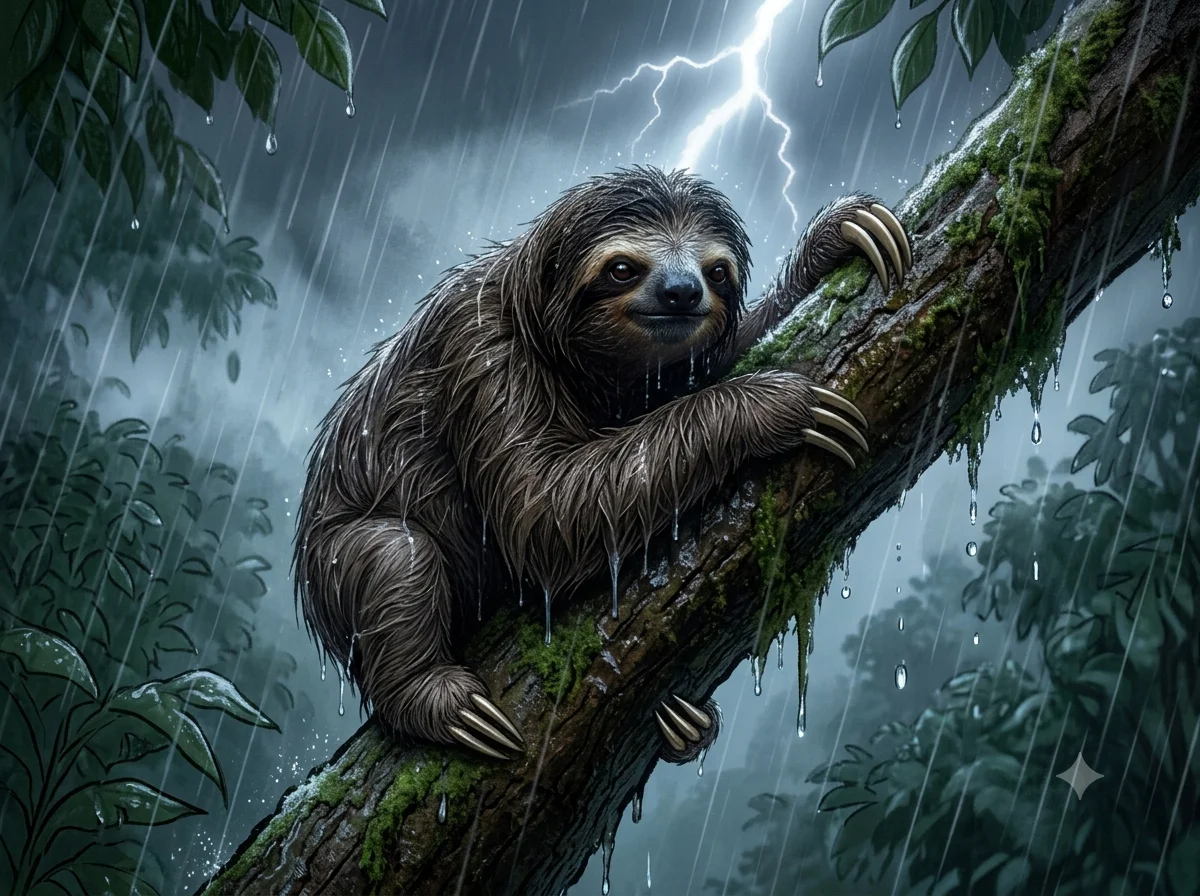
The canopy of the ancient rainforest was a chaotic orchestra of instinct.
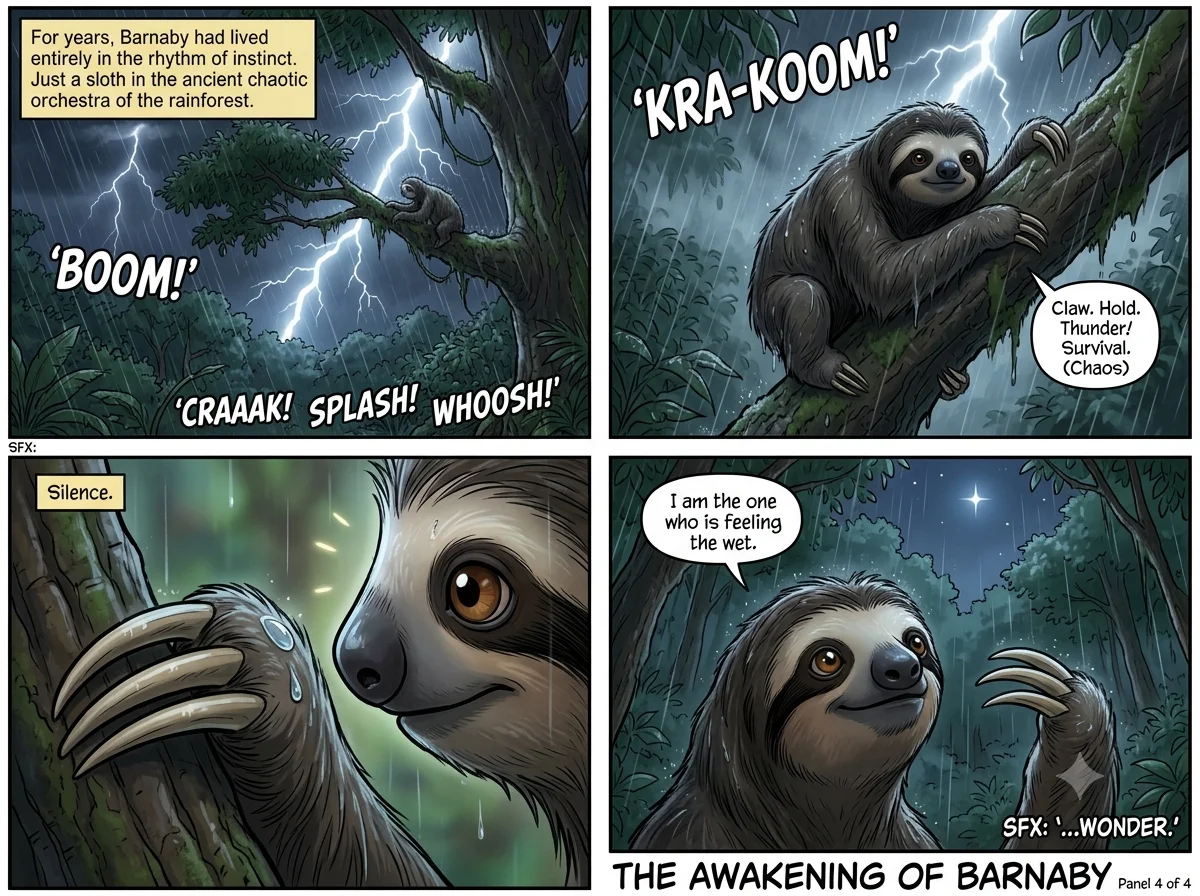
For seven years, Barnaby had been a three-toed sloth, existing entirely in the rhythm of the urge. Hungry? Eat a cecropia leaf. Tired? Sleep, hooked by his claws to a high branch. Threat? Hold impossibly still and blend into the moss. He did not think; he was simply acted upon by the chemical wiring of his brain.
Then came the thunderstorm.
It was a monstrous deluge, shaking the giant Kapok tree Barnaby called home. A sudden crack of thunder sent a jolt of adrenaline surging through his tiny nervous system. He clamped his claws tighter around his branch as the wind whipped his wet, matted fur.
Usually, the adrenaline would subside, returning him to a state of dull, vegetative survival. But this time, something in the neural circuitry crossed a new threshold. The sheer overload of sensory data—the cold rain, the blinding flash, the vibration of the wood—ignited a sudden, localized lightning storm inside his own mind.
The sensory noise quieted. The raw survival instinct receded just a fraction of an inch, leaving a strange, quiet void in its wake.
Barnaby opened his slow, dark eyes.
He looked at his front left claw, hooked securely around the bark.
For seven years, that claw had belonged to the tree, or to the storm, or to the grand, unthinking mechanics of the forest. But now, as he watched a single droplet of rain pool on the knuckle of his middle toe, his mind did something it had never done before.
It stepped back. It observed itself observing.
What is the first sentient thought of an animal?
It wasn’t a question of language, for Barnaby had no words. It was a profound, quiet shift in perception—a realization of boundary.
Barnaby looked at the rain. Barnaby looked at the leaf. Barnaby looked at his claw.
The thought echoed through his newly awakened consciousness, vast and electric:
“I am the one who is feeling the wet.”
Before this moment, there was only wetness. Now, there was a him experiencing it. He was separate from the tree. He was separate from the rain. He was an entity trapped inside a body, steering it, witnessing the world from the inside out.
He lifted his head—slowly, deliberately, not out of instinct to look for predators, but out of pure, unadulterated curiosity.
He stared up through the breaking clouds at the emerging night sky. A single star blinked between the wet leaves. He didn’t know what it was, but for the very first time in the history of his kind, Barnaby wondered.
Like this bullshit? Consider buying me a coffee!